
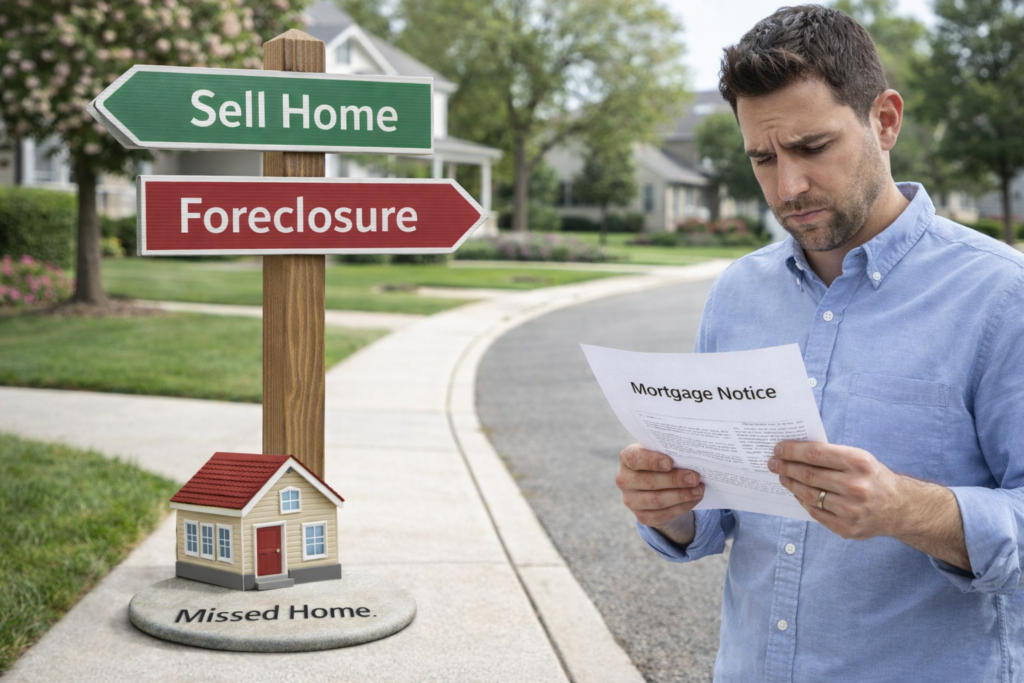
If you are facing foreclosure, you may be wondering whether selling your home could help you avoid the situation entirely.
Many homeowners are surprised to learn that selling a property before foreclosure is often possible.
In fact, some homeowners decide that selling before foreclosure gives them the most control over the situation.
This guide explains how selling before foreclosure works and when it may be worth considering.
If you are unfamiliar with how the foreclosure process begins, you may want to read our guide:
What Pre-Foreclosure Means in California.
Can You Sell a Home During Pre-Foreclosure?
Yes. In most cases, homeowners can still sell their home during the pre-foreclosure stage.
Pre-foreclosure is the period after the lender files a Notice of Default but before the foreclosure auction occurs.
During this time:
The homeowner still owns the property
The property can still be sold
The foreclosure process may be resolved through the sale
You can learn more about the stages of foreclosure here: California Foreclosure Timeline Explained.
Why Some Homeowners Choose to Sell Before Foreclosure
Selling a property before foreclosure is not the right solution for everyone, but it can offer several potential advantages.
Avoid Foreclosure on Your Credit
A completed foreclosure can significantly impact credit for several years.
Selling the home beforehand may help avoid having a foreclosure recorded on your credit history.
Protect Remaining Equity
If the property still has equity, selling before foreclosure may allow the homeowner to recover some of that value.
Once a property goes to foreclosure auction, the homeowner usually loses access to that equity.
Reduce Stress and Uncertainty
Foreclosure can be an extremely stressful process.
Some homeowners choose to sell because it provides a clear path forward and allows them to move on financially.
Avoid Additional Legal Costs
The longer the foreclosure process continues, the more fees may accumulate.
These may include:
Legal fees
Trustee fees
Penalties and interest
Selling earlier may help reduce those costs.
Traditional Sale vs Investor Sale
Homeowners considering selling before foreclosure typically explore two types of sales.
Traditional Real Estate Sale
This involves listing the property with a real estate agent and selling through the open market.
Advantages may include:
Potentially higher sale price
Wider buyer exposure
However, this option may take longer and sometimes requires repairs or preparation.
Direct Sale to a Real Estate Investor
Some homeowners choose to sell directly to an investor.
These transactions are sometimes faster because:
Investors may purchase properties as-is
Fewer repairs may be required
Closing timelines may be shorter
Every situation is different, so homeowners often review multiple options before deciding.
What If the Mortgage Balance Is Higher Than the Home Value?
In some situations, homeowners may owe more on the mortgage than the property is worth.
This situation is sometimes called being underwater on the loan.
In these cases, a short sale may be possible.
A short sale occurs when the lender agrees to accept less than the full mortgage balance to allow the property to be sold.
When Selling Before Foreclosure May Make Sense
Some homeowners consider selling before foreclosure when:
Catching up on payments is not possible
Financial hardship is long-term
The home needs major repairs
There is little desire to keep the property
However, homeowners should always carefully evaluate all available options.
Some alternatives to selling include:
Loan modification
Repayment plans
Forbearance
You can read more about those options here: 5 Ways Homeowners Stop Foreclosure.
How Much Time Do You Have to Sell?
The amount of time available depends on the foreclosure timeline.
In California, the process typically includes:
Notice of Default period
90-day waiting period
Notice of Trustee Sale
Foreclosure auction
Understanding the timeline helps homeowners determine whether selling is still possible.
You can review the full timeline here: California Foreclosure Timeline Explained.
How to Decide What Option Is Right
Every homeowner's situation is unique.
Some homeowners prefer to keep the property and pursue loan solutions.
Others may decide that selling before foreclosure is the most practical option.
Understanding all available choices can help homeowners make informed decisions.
Speak With Someone About Your Options
Many homeowners simply want to understand their situation and possible next steps.
If you would like to review your options, Contact us for a confidential consultation.
Final Thoughts
Facing foreclosure can feel overwhelming, but selling your home before foreclosure may be one possible solution depending on the situation.
Exploring options early often provides homeowners with the greatest flexibility and the ability to make
Get in touch to see how we can possibly extend your foreclosure date if you are considering selling.
The homeowner still owns the property
The property can still be sold
The foreclosure process may be resolved through the sale
Legal fees
Trustee fees
Penalties and interest
Potentially higher sale price
Wider buyer exposure
Investors may purchase properties as-is
Fewer repairs may be required
Closing timelines may be shorter
Catching up on payments is not possible
Financial hardship is long-term
The home needs major repairs
There is little desire to keep the property
Loan modification
Repayment plans
Forbearance
Notice of Default period
90-day waiting period
Notice of Trustee Sale
Foreclosure auction