
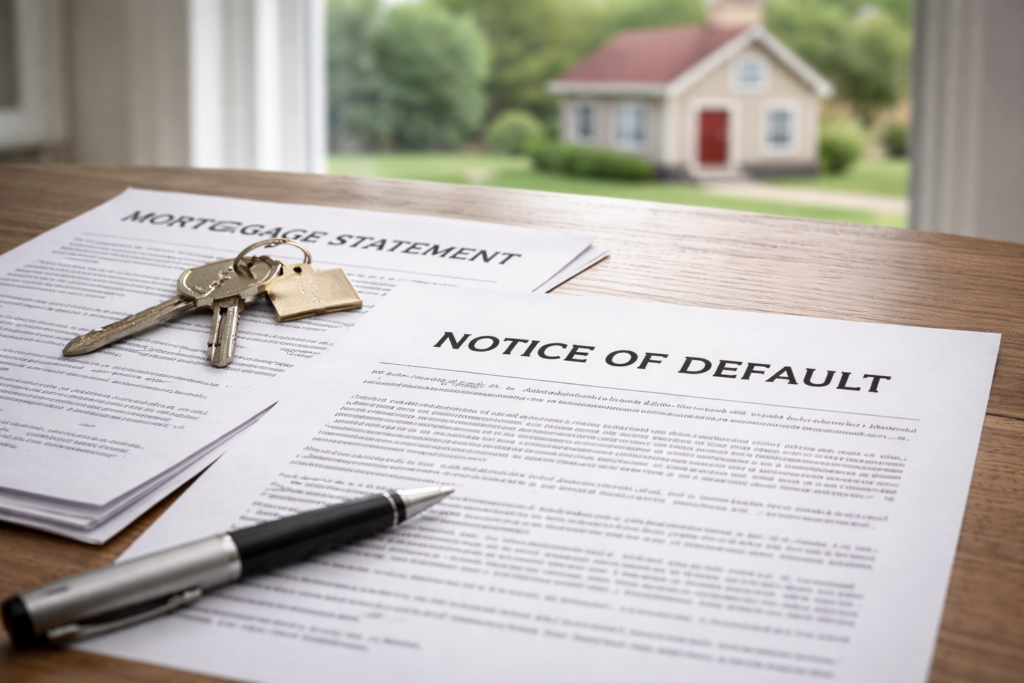
Receiving a Notice of Default can be one of the most stressful moments for a homeowner.
Many people assume that this document means they are about to lose their home.
However, a Notice of Default does not mean foreclosure happens immediately.
In most cases, it simply means that the lender has started the legal foreclosure process because mortgage payments have fallen behind.
Understanding what a Notice of Default means can help homeowners make informed decisions about their next steps.
What Is a Notice of Default?
A Notice of Default (NOD) is a legal document filed by the lender with the county recorder when a homeowner has fallen significantly behind on mortgage payments.
The Notice of Default officially begins the foreclosure process in California.
Once the notice is recorded:
The homeowner enters the pre-foreclosure stage
The lender signals intent to recover the loan
The foreclosure timeline begins
You can read more about the pre-foreclosure stage here: What Pre-Foreclosure Means in California.
Why Lenders File a Notice of Default
Most lenders file a Notice of Default after three to four missed mortgage payments.
Before this happens, homeowners usually receive:
Late payment notices
Collection letters
Warning notices
If the loan remains delinquent, the lender may proceed with filing the Notice of Default.
Does a Notice of Default Mean You Will Lose Your Home?
No.
A Notice of Default simply begins the foreclosure timeline. Many homeowners still have time to explore possible solutions.
In California, lenders must usually wait at least 90 days after filing the Notice of Default before moving to the next stage of foreclosure.
This time period gives homeowners the opportunity to explore possible options.
You can review the full foreclosure process here: California Foreclosure Timeline Explained.
What Happens After a Notice of Default?
After the Notice of Default is filed, the foreclosure process typically follows several steps.
1. 90-Day Reinstatement Period
California law requires lenders to wait at least 90 days after the Notice of Default before scheduling a foreclosure sale.
During this period, homeowners may explore solutions.
2. Notice of Trustee Sale
If the loan is not resolved during the reinstatement period, the lender may file a Notice of Trustee Sale.
This notice schedules the foreclosure auction.
3. Foreclosure Auction
If the situation is not resolved before the scheduled auction date, the property may be sold.
Options Homeowners May Have After Receiving a Notice of Default
Receiving a Notice of Default can feel overwhelming, but homeowners often still have options depending on their situation.
Some possible options include:
Loan Modification - Adjusting the mortgage terms to reduce monthly payments.
Repayment Plan - Catching up on missed payments over time.
Forbearance - Temporary payment reduction during hardship.
Selling the Property - Some homeowners choose to sell their home before foreclosure.
You can read more about foreclosure solutions here: 5 Ways Homeowners Stop Foreclosure.
Can You Sell Your Home After Receiving a Notice of Default?
Yes.
Many homeowners sell their home during the pre-foreclosure period.
Selling before foreclosure may help homeowners:
Avoid foreclosure on their credit
Preserve remaining equity
Move forward financially
You can read more about that option here: Should You Sell Your Home Before Foreclosure.
How Much Time Do Homeowners Have?
The foreclosure timeline varies depending on the situation.
However, in California the process often takes several months.
Understanding the timeline can help homeowners evaluate their options - California Foreclosure Timeline Explained.
Free Guide for California Homeowners
If you recently received a Notice of Default and want to better understand your options, we created a guide explaining the foreclosure process and possible solutions.
You can check it out here: California Foreclosure Help Guide
Speak With Someone About Your Situation
Many homeowners simply want to understand their options before making a decision.
If you would like to review your situation privately, contact us for a confidential consultation.
Final Thoughts
Receiving a Notice of Default can be frightening, but it does not necessarily mean foreclosure is inevitable.
Understanding the foreclosure process and the options available may help homeowners make informed decisions during a difficult time.
Get in touch to see how we can possibly extend your foreclosure date if you are considering selling.
The homeowner enters the pre-foreclosure stage
The lender signals intent to recover the loan
The foreclosure timeline begins
Late payment notices
Collection letters
Warning notices
Loan Modification - Adjusting the mortgage terms to reduce monthly payments.
Repayment Plan - Catching up on missed payments over time.
Forbearance - Temporary payment reduction during hardship.
Selling the Property - Some homeowners choose to sell their home before foreclosure.
Avoid foreclosure on their credit
Preserve remaining equity
Move forward financially