
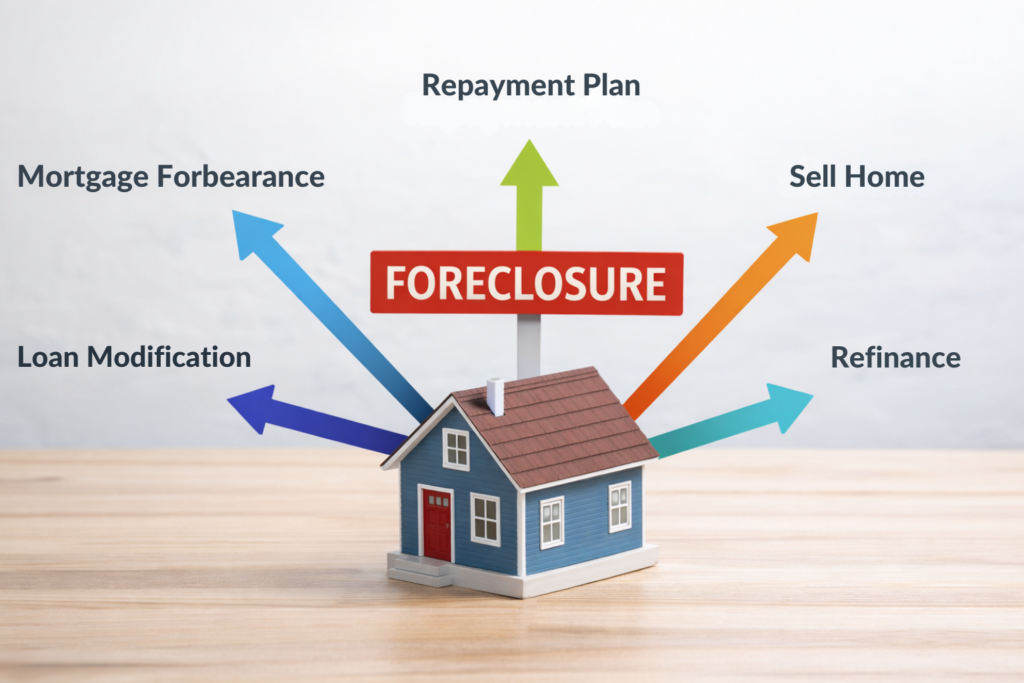
Receiving a foreclosure notice can be overwhelming. Many homeowners believe that once foreclosure begins there is nothing they can do.
The reality is that many homeowners successfully stop foreclosure every year.
The key is understanding the options available and acting as early as possible.
This guide explains five common ways homeowners stop foreclosure in California.
If you are unfamiliar with how the foreclosure process begins, you may want to first read our guide: What Pre-Foreclosure Means in California
1. Loan Modification
One of the most common ways homeowners stop foreclosure is through a loan modification.
A loan modification occurs when the lender agrees to adjust the mortgage terms to make payments more affordable.
This may include:
Lowering the interest rate
Extending the loan term
Reducing monthly payments
Adding missed payments to the loan balance
Loan modifications are typically considered when a homeowner has experienced financial hardship but can still afford a reduced payment.
Homeowners usually apply directly through their mortgage lender or loan servicer.
2. Mortgage Forbearance
Forbearance allows homeowners to temporarily pause or reduce mortgage payments during financial hardship.
This option may be available if the homeowner experienced:
Job loss
Medical issues
Temporary income disruption
During the forbearance period, payments are paused or reduced while the homeowner stabilizes their finances.
After the period ends, the homeowner typically works with the lender to create a repayment plan.
3. Repayment Plan
A repayment plan allows homeowners to catch up on missed mortgage payments gradually.
Instead of paying the full delinquent amount immediately, the lender may allow the homeowner to make additional payments over several months.
For example:
Regular monthly mortgage payment
Plus a portion of past-due payments
This solution may work well for homeowners who experienced a short-term financial setback but are now earning income again.
4. Selling the Home Before Foreclosure
In some cases, homeowners decide that selling the property before foreclosure is the best option.
Selling may help homeowners:
Avoid foreclosure appearing on their credit report
Preserve remaining equity
Avoid additional legal costs
Move forward financially
Many homeowners choose to sell their home before the foreclosure auction date.
You can read a full breakdown of this option here: Should You Sell Your Home Before Foreclosure
5. Refinancing the Mortgage
Some homeowners are able to refinance their mortgage to stop foreclosure.
Refinancing replaces the existing mortgage with a new loan that has more manageable terms.
This option may be possible if:
The homeowner still has sufficient equity
The homeowner’s credit still qualifies for a new loan
The property value supports refinancing
Refinancing may allow homeowners to:
Lower their monthly payment
Extend the loan term
Pay off delinquent mortgage balances
However, refinancing can be difficult if foreclosure is already far along, which is why exploring options early is important.
How Much Time Do Homeowners Have?
The foreclosure process in California usually takes several months, depending on the situation.
Understanding the timeline helps homeowners determine which option may work best.
You can learn more about the full process here: California Foreclosure Timeline Explained
The Importance of Acting Early
The earlier a homeowner addresses foreclosure, the more options are usually available.
Waiting too long may limit possible solutions.
If you are currently facing mortgage difficulties, exploring your options sooner rather than later may provide the greatest flexibility.
When to Seek Help
Many homeowners simply want someone to help them understand the situation and possible next steps.
If you would like to review your options, you can Get in touch for a confidential consultation.
Final Thoughts
Facing foreclosure can be stressful, but it does not always mean losing your home.
Loan modifications, repayment plans, forbearance, refinancing, and selling options may all provide possible solutions depending on the situation.
Understanding these options can help homeowners make informed decisions during a difficult time.
Get in touch to see how we can possibly extend your foreclosure date if you are considering selling.
Lowering the interest rate
Extending the loan term
Reducing monthly payments
Adding missed payments to the loan balance
Job loss
Medical issues
Temporary income disruption
Regular monthly mortgage payment
Plus a portion of past-due payments
Avoid foreclosure appearing on their credit report
Preserve remaining equity
Avoid additional legal costs
Move forward financially
The homeowner still has sufficient equity
The homeowner’s credit still qualifies for a new loan
The property value supports refinancing
Lower their monthly payment
Extend the loan term
Pay off delinquent mortgage balances