
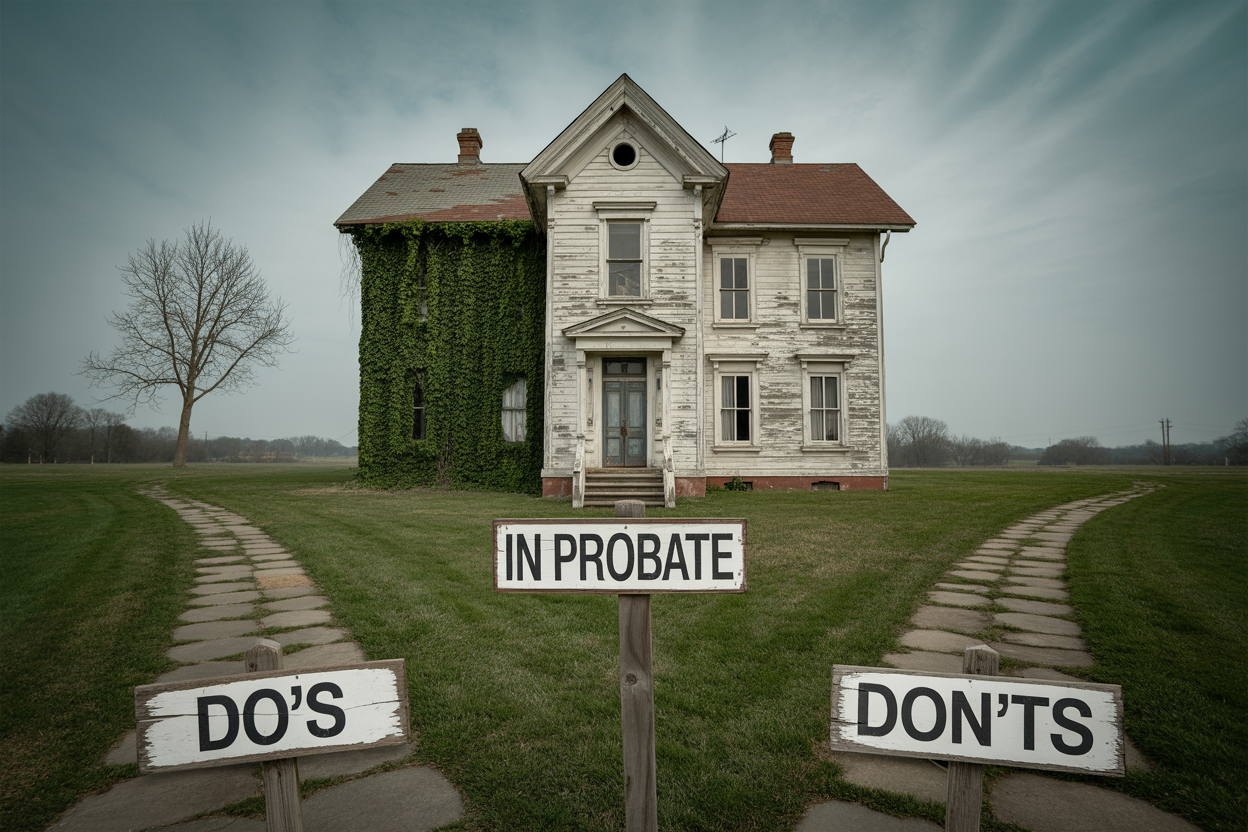
Probate can be an emotional and complicated process—especially when real estate is involved. Whether you’re managing an estate, inheriting property, or buying from a probate sale, it’s essential to understand what you should and shouldn’t do to avoid costly legal pitfalls.
In this guide, we’ll walk through the most important do’s and don’ts of probate involving real estate, helping you manage the process efficiently and legally.
What Is Probate Real Estate?
Probate real estate refers to property owned by a deceased person that must be distributed according to their will or, if no will exists, by state intestacy laws. The probate court oversees this process to ensure all debts are paid and the remaining assets are transferred to rightful heirs or beneficiaries.
Do’s of Probate Involving Real Estate
1. Do Confirm Ownership and Title Status Early
Before any action is taken, verify how the title of the property is held. If it’s in the decedent’s name only, the property likely must go through probate.
-
Check for joint tenancy, right of survivorship, or transfer-on-death (TOD) deeds, which may allow the property to avoid probate.
-
Conduct a title search to uncover any liens or claims.
2. Do Hire an Experienced Probate Attorney
Probate law varies by state, and real estate adds complexity. A qualified probate attorney can:
-
Guide you through court procedures
-
Help file required documents
-
Advise on asset distribution and tax implications
Here’s a directory of probate attorneys from Nolo, a trusted legal resource.
3. Do Secure and Maintain the Property
After the owner’s death, the property can quickly fall into disrepair or become a target for theft or vandalism.
-
Change the locks
-
Maintain utilities and landscaping
-
Secure property insurance
This protects both the physical asset and its future sale value.
4. Do Get a Professional Appraisal
The probate court typically requires a certified appraisal to assess fair market value. This is crucial for:
-
Estate tax filings
-
Determining equitable inheritance
-
Future sale decisions
The IRS mandates using the “date of death” fair market value for reporting purposes (source).
5. Do Understand the Tax Implications
Heirs may benefit from a stepped-up basis for inherited property, meaning capital gains are calculated based on the property’s value at the time of death—not the original purchase price. This can reduce taxable gains if the property is sold soon after probate.
Learn more from the IRS on Inherited Property.
Don’ts of Probate Involving Real Estate
1. Don’t Skip the Probate Process (If Required)
Trying to sell or transfer a property without legal probate (when it’s required) is illegal and can invalidate the sale.
Check with the probate court or an attorney to determine whether probate is mandatory in your case. In some states, summary probate or small estate procedures may simplify the process.
2. Don’t Rush to Sell Without Court Approval
If you are the executor, you must often obtain court approval before listing or selling probate property. Skipping this step can result in:
-
Lawsuits from heirs
-
Voided transactions
-
Loss of fiduciary privileges
In many cases, the sale must go through a public bidding process. For example, California has a specific Probate Sale Procedure.
3. Don’t Ignore Liens or Debts Attached to the Property
All outstanding debts—such as mortgages, property taxes, or HOA dues—must be settled before property distribution. Ignoring these can result in foreclosure or financial liability for the estate or heirs.
Order a preliminary title report to identify any encumbrances.
4. Don’t Assume You Can Live in the Property Right Away
Even if you’re a family member or named heir, you don’t automatically gain the right to occupy the property before probate is completed—unless you had legal rights prior (e.g., joint tenancy).
Consult the estate attorney before making plans to move in.
5. Don’t Divide Property Without Legal Authority
Real estate can’t be legally split among heirs like cash or personal property. It must either be:
-
Sold and proceeds divided
-
Retitled to one or more beneficiaries (with legal documentation)
Any division must be approved by the court and follow state inheritance laws.
Visual Breakdown: Probate Real Estate Process Timeline
| Step | Action | Responsible Party | Notes |
|---|---|---|---|
| 1 | File for probate | Executor or attorney | Petition filed with probate court |
| 2 | Inventory property | Executor | Includes appraisal |
| 3 | Secure and maintain home | Executor or family | Insurance, utilities, safety |
| 4 | Settle debts and taxes | Executor | Must be paid before distribution |
| 5 | Court reviews & approves | Probate judge | Required for any sale or transfer |
| 6 | Distribute or sell property | Executor or court | Follows will or state laws |
Final Thoughts
Probate involving real estate is a nuanced process that requires legal diligence, patience, and transparency. From title issues to tax implications, it’s crucial to follow the correct steps to avoid financial loss or legal challenges. Whether you’re an executor or heir, staying informed and working with professionals will ensure a smoother process.
Contact us today to speak with our Certified Probate Real Estate Specialist that will answer questions and assist you through your probate journey.